Warehouse Pallet Rack Guide: Types, Structure and Selection Tips
Warehouse Pallet Rack Systems: Direct Answer and Core Overview
A warehouse pallet rack is a structural steel storage framework built from metal pallet racking components—upright frames, horizontal load beams, and safety locking connectors—engineered to hold palletized goods in organized, multi-level positions inside a warehouse, distribution center, or manufacturing facility. Choosing the right pallet storage rack configuration is largely a matter of matching storage density, SKU selectivity, and building height to actual operational needs rather than defaulting to a single standard layout. For general-purpose warehouses handling a broad mix of stock-keeping units, a selective pallet rack system arranged in back-to-back rows typically offers the most practical starting point, since it provides direct forklift access to every pallet position. Facilities storing large volumes of a limited number of SKUs, such as cold storage or bulk food distribution operations, generally benefit more from higher-density configurations such as drive-in or pallet flow racking.
This guide works through the common rack types, their structural principles, selection criteria, a detailed side-by-side comparison, current industry trends, and the maintenance practices that keep a warehouse pallet rack installation safe and productive over its service life. Because a fully loaded rack level can carry a substantial concentrated load, structural design and ongoing inspection are not optional extras; they are a core part of warehouse safety programs. Storage rack layout also has a direct, measurable effect on cubic storage utilization, forklift travel distance, and order-picking productivity, which is why procurement teams increasingly treat racking selection as an engineering decision rather than a purely budgetary one.
Key takeaway: the right warehouse pallet rack configuration is determined primarily by SKU count, throughput pattern, and building height, not by defaulting to one universal layout.
Common Types of Metal Pallet Racking Systems and Core Features
Metal pallet racking is manufactured in several structural configurations, each built around the same core components—roll-formed or structural steel upright frames, horizontal beams, and safety locking connectors—but arranged to prioritize either selectivity, storage density, or a balance of both. Selective racking remains the most widely installed configuration because it gives direct, independent access to every pallet position without requiring specialized forklifts. Double-deep, drive-in, drive-through, push-back, and pallet flow (gravity) racking sacrifice some or all individual pallet selectivity in exchange for materially higher storage density within the same building footprint. Cantilever racking, while structurally different, is commonly grouped with pallet racking product families because it addresses long or irregularly shaped loads that do not fit conventional beam levels. The table below summarizes the primary configurations found in most warehouse pallet rack product lines.
Overview of common metal pallet racking configurations and their typical operational fit.
Racking Type
Access / Selectivity
Typical Product Flow
Best Suited For
Selective Pallet Racking
Direct access to every position
FIFO or mixed rotation
Broad SKU ranges, general distribution
Double-Deep Racking
Reduced (two pallets deep)
FIFO / LIFO combination
Moderate SKU count with reach truck
Drive-In / Drive-Through Racking
Low (single or dual-entry lane)
LIFO (drive-in) / FIFO (drive-through)
High-volume, limited SKU bulk storage
Push-Back Racking
Moderate (2-6 pallets deep per lane)
LIFO
Medium-density bulk storage
Pallet Flow (Gravity) Racking
Low individual access, high lane throughput
FIFO
Perishable or date-sensitive inventory
Cantilever Racking
Full access, open-arm design
Not applicable (non-palletized loads)
Long, bulky, or irregular items
Understanding how demand is currently distributed across these configurations helps put an individual product decision into a broader market context. Selective racking has historically dominated new installations because of its simplicity, lower engineering complexity, and universal compatibility with standard counterbalance and reach forklifts. Higher-density formats have grown steadily as e-commerce and cold-chain operators pursue tighter cubic utilization inside constrained building footprints. The chart below breaks the global racking-type market into two broad groups so the relative weight of selective racking becomes easier to visualize. This composition is drawn from a 2025 global pallet racking market analysis published by Precedence Research.
Selective Racking — 32% Other Racking Types Combined — 68%
Market share by racking type, 2024, based on Precedence Research global pallet racking market analysis.
According to the Precedence Research analysis, the selective racking segment accounted for just over 32 percent of global pallet racking type revenue in 2024, the largest single share among all listed configurations. The remaining 68 percent is spread across drive-in, drive-through, push-back, pallet flow, cantilever, and other specialized formats, none of which individually approaches the scale of selective racking on its own. This distribution reflects the practical reality that most warehouses carry a mixed SKU profile and therefore need direct pallet access more than they need maximum density. At the same time, a combined 68 percent share for higher-density and specialty formats shows that a large and growing portion of global demand is no longer satisfied by a single universal rack type. The same report notes that the push-back racking segment is expected to expand at a comparatively fast rate going forward, which is consistent with rising interest in denser, lane-based storage among mid-size distribution operators. Facilities planning a new build or a retrofit can treat this market composition as a general reference point rather than a prescriptive formula, since the correct mix for any single site still depends on local SKU count, throughput, and building constraints. A distribution center handling thousands of active SKUs with daily replenishment will typically lean toward the selective share of this chart, while a cold-storage or bulk-commodity operation will usually sit within the higher-density remainder. Procurement and facilities teams can use this composition as a sanity check during the concept stage: if a proposed layout leans heavily toward high-density racking despite a broad, fast-moving SKU catalog, the design may be prioritizing density over the accessibility the operation actually needs. Conversely, a bulk cold-storage facility relying primarily on selective racking is likely leaving usable cubic capacity on the table. Reviewing this type of market composition alongside an internal SKU velocity study gives warehouse planners a more grounded starting point before finalizing a metal pallet racking specification.
Key takeaway: selective racking remains the largest single racking-type category worldwide, but combined high-density and specialty formats now represent the majority of global demand.
Structural Design and Load-Bearing Principles of Pallet Storage Rack Systems
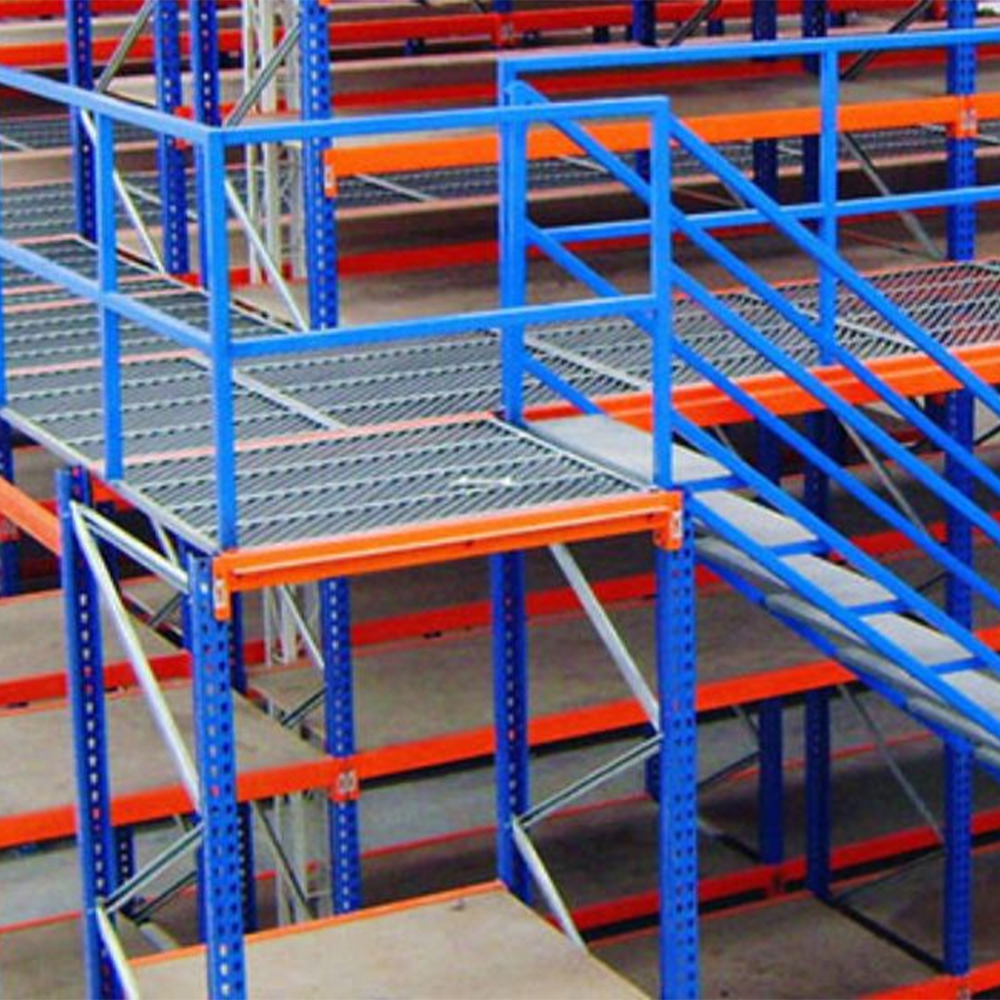
Every pallet storage rack system, regardless of configuration, is built from a common set of structural elements. Upright frames consist of vertical columns connected by horizontal and diagonal bracing, forming the load path that carries beam-level weight down to the floor through base plates and anchor bolts. Horizontal load beams connect between frames and support the pallets themselves, either directly on the beam flange or on wire mesh decking, depending on pallet condition and product packaging. Safety locking connectors, sometimes called beam-to-frame locks, mechanically secure each beam to its frame so that beams cannot be dislodged by lateral forklift contact. Row spacers tie adjacent back-to-back rows together for additional lateral stability, while wall ties or ceiling bracing may be added in seismic zones or for taller high-bay installations.
Load Capacity Classification
Load capacity is typically engineered and rated at two levels: the beam level, which is the maximum weight one pair of beams can carry, and the frame or upright level, which is the cumulative weight the full column can support across all levels. Industry product classifications generally group systems into light-duty racking, rated up to roughly 1,000 kilograms per level ; medium-duty racking, typically rated between 1,000 and 3,000 kilograms per level ; and heavy-duty racking, rated above 3,000 kilograms per level , based on the product-type segmentation used in a 2025 pallet racking market report from Market Research Future. Matching the correct duty class to actual pallet weights, including packaging and any variation between SKUs, is one of the most consequential decisions in a warehouse pallet rack specification, since underrating a beam or frame creates a genuine structural safety risk rather than a simple performance shortfall. Engineered layout drawings should always confirm beam capacity, frame capacity, and floor loading together, since a system can be limited by any one of the three even when the other two appear adequate.
Storage density is one of the clearest ways different rack configurations distinguish themselves once basic load capacity requirements are satisfied. Because selective racking dedicates a full aisle to every row for independent pallet access, it is structurally the least dense of the common formats, even though it remains the easiest to specify and inspect. Deeper or lane-based configurations reduce or eliminate individual aisles, which is what allows them to fit substantially more pallet positions into the same building footprint. Several material handling equipment buying guides quantify this relationship in similar terms, generally agreeing on the relative order of density gains across formats even when exact figures vary by facility. The chart below presents an illustrative storage-density index, with selective racking set at a baseline value of 100, compiled from that published buying-guide guidance.
Illustrative storage-density index by racking configuration, selective racking = 100 baseline.
On this index, double-deep racking is commonly described as providing roughly twice the pallet positions of single-deep selective racking within a comparable footprint, since it stores two pallets in depth per opening while still allowing reach-truck access. Drive-in racking is frequently cited as delivering somewhere in the range of 40 to 60 percent more pallet positions than selective racking in the same floor area, because it removes most internal aisles and lets the forklift enter the rack structure itself. Push-back racking, which uses inclined rails and gravity-fed carts, is often described as capable of increasing density by up to roughly 75 percent compared with a selective layout, while still loading and unloading from a single aisle face. These figures should be read as general planning indicators rather than site-specific guarantees, because actual density gains depend heavily on pallet dimensions, beam spacing, and building column layout. What the index does make clear is the underlying trade-off that governs almost every racking decision: density and selectivity move in opposite directions as a system moves from selective toward drive-in or push-back configurations. A facility that adopts a high-density format without a genuine need for it typically ends up with slower picking operations and more forklift travel time than a simpler selective layout would have required. Conversely, a facility that stays with selective racking purely out of habit, despite storing large uniform lots of a few SKUs, is likely paying for unused cubic volume and unnecessary aisle space. Warehouse planners often address this trade-off by combining formats within a single building, using selective racking for fast-moving, high-SKU-count zones and a denser configuration for bulk or reserve storage of a narrower product range. This hybrid approach allows the density index above to function as a design input for specific zones rather than a single facility-wide choice. Reviewing pallet dimensions, average lot size, and forklift type against this index early in the design process helps prevent a mismatch between structural investment and actual operational need.
Key takeaway: storage density increases as a rack configuration moves from selective toward drive-in or push-back, but each density gain comes with a corresponding reduction in individual pallet selectivity.
Application Scenarios and Key Selection Factors for Warehouse Pallet Rack Systems
Warehouse pallet rack systems are specified across a wide range of operational environments, and the correct configuration usually differs from one scenario to the next. Third-party logistics providers handling multiple clients typically need broad selectivity because SKU mixes change frequently. Cold storage and blast-freezer facilities often prioritize density formats such as drive-in or pallet flow racking, since refrigerated cubic space carries an ongoing operating cost that makes tighter storage especially valuable. Manufacturing plants commonly use pallet racking for raw-material staging and finished-goods buffering close to the production line, while retail distribution centers rely on high-selectivity layouts to support fast, accurate replenishment picking. E-commerce fulfillment centers frequently combine selective racking for piece-pick zones with denser bulk storage for reserve inventory feeding those zones.
When Selectivity Should Be the Priority
Broad SKU range with frequent replenishment
Mixed pallet dimensions or weights
Fast, accurate order-picking is critical
Multiple staff or shifts working the same aisles
When Density Should Be the Priority
Large, uniform lots of a limited SKU count
Refrigerated or temperature-controlled space
Building footprint or ceiling height is constrained
Batch or date-controlled inventory rotation
Beyond the scenario itself, several concrete factors should guide the final specification of any metal pallet racking layout:
Pallet dimensions and maximum unit load weight, including packaging and any seasonal SKU variation.
Forklift type and required aisle width, since narrow-aisle turret trucks allow tighter layouts than standard counterbalance trucks.
Available ceiling or building height, which determines how many beam levels a bay can realistically support.
SKU velocity and turnover rate, which influences how much selectivity the operation actually needs.
Local seismic zone and building code requirements, which affect bracing, anchoring, and frame bracing specifications.
Future expansion plans, since a layout that leaves room for additional bays or levels is generally more cost-efficient over time than one designed only for current volume.
Key takeaway: matching a warehouse pallet rack layout to SKU velocity, forklift type, and building height prevents the two most common specification mistakes—over-building density where selectivity was needed, and under-building density where bulk storage was needed.
Detailed Comparison: Selective, Drive-In, and Pallet Flow Pallet Storage Rack Systems
Selective, drive-in, and pallet flow racking are the three configurations most frequently compared against one another because together they span the full range from maximum selectivity to maximum density. The table below summarizes their core operating characteristics side by side.
Side-by-side comparison of selective, drive-in, and pallet flow pallet storage rack systems.
Attribute
Selective Racking
Drive-In Racking
Pallet Flow Racking
Product Rotation
FIFO or mixed
LIFO
FIFO
SKU Selectivity
High
Low
Low to Moderate
Typical Aisle Requirement
One aisle per row
Minimal, single entry face
Minimal, load and unload faces
Relative Density vs Selective
Baseline
Higher
Higher
Typical Application
Broad SKU distribution
Bulk storage, limited SKUs
Perishable, date-sensitive goods
A single table can only show static attributes, so it helps to also view these three systems across several operating dimensions at once. Selectivity, storage density, FIFO rotation support, access speed, and cost efficiency per pallet position all interact differently depending on the configuration chosen. Warehouse teams evaluating a new layout often find it easier to weigh trade-offs visually rather than reading attributes one row at a time. The radar chart below plots illustrative ratings for each system across five commonly cited evaluation criteria, drawn from general characteristics referenced across material handling industry buying guides. Higher values toward the outer edge indicate a stronger characteristic on that particular axis.
Illustrative multi-attribute comparison of selective, drive-in, and pallet flow racking based on general system characteristics.
The radar chart makes the underlying trade-offs easier to see than the comparison table alone. Selective racking scores highest on selectivity and access speed, reflecting its ability to reach any pallet without disturbing another load, but it scores lowest on storage density among the three systems shown. Drive-in racking sits almost opposite selective racking on the chart, scoring strongly on density and reasonably well on cost efficiency per pallet position, while scoring low on selectivity and FIFO rotation support because its typical last-in-first-out flow limits strict date rotation. Pallet flow racking occupies a middle position on several axes but stands out clearly on FIFO rotation support, which is its defining structural advantage over drive-in racking for perishable or date-sensitive goods. Because pallet flow racking uses inclined roller lanes and gravity feed, it can combine relatively high density with reliable first-in-first-out stock rotation, at the cost of a more complex lane structure than drive-in racking requires. None of the three systems scores highly across all five axes simultaneously, which is precisely why racking selection is described throughout this guide as a trade-off exercise rather than a search for a single universally superior format. A warehouse manager evaluating cold-chain or food-grade inventory will likely weigh the FIFO rotation axis more heavily than a manager storing non-perishable industrial components. An operation constrained by a small building footprint but serving many active SKUs may find that none of these three pure formats fits well on its own, which is a common reason many facilities adopt a hybrid layout instead. Viewing the chart alongside the density index from the previous section gives a more complete picture, since density alone does not capture rotation requirements or picking speed. Warehouse planners frequently use exactly this kind of multi-attribute view during the concept design phase, before committing to a detailed engineered layout with a chosen metal pallet racking supplier.
Key takeaway: no single racking configuration scores well across selectivity, density, rotation, speed, and cost efficiency at once, which is why the correct choice depends on which of those factors matters most for a given operation.
Industry Trends Shaping Metal Pallet Racking Adoption
Global demand for warehouse pallet rack systems has been rising steadily, driven largely by e-commerce growth, expanding contract logistics, and the ongoing need for cost-effective movement and storage of palletized goods. According to Precedence Research, the global pallet racking market was valued at approximately USD 12.27 billion in 2025 and is projected to reach roughly USD 27.34 billion by 2034 , representing a compound annual growth rate of about 9.31 percent over that period. The same analysis reports that North America held the largest regional share, at roughly 36 percent of the global market in 2024, while the Asia-Pacific region is identified as the fastest-growing market over the forecast period, reflecting continued expansion of manufacturing and distribution infrastructure across the region. These figures point to sustained, broad-based investment in pallet storage rack infrastructure rather than a short-term spike tied to a single industry or region.
Several structural trends sit behind this growth. Warehouse operators are increasingly designing for taller, high-bay buildings to maximize cubic storage within a fixed land footprint, which has increased demand for narrow-aisle-compatible racking and higher frame engineering standards. Automation and semi-automated retrieval systems are being integrated into conventional pallet racking more often than in the past, which places additional emphasis on beam-level tolerances and structural consistency. Food, beverage, and pharmaceutical sectors continue to expand their use of temperature-controlled storage, reinforcing demand for the higher-density formats discussed earlier in this guide. Across most regions, growing attention to structural safety and periodic inspection programs is also shaping how new metal pallet racking systems are specified and documented from the outset.
To put the pace of this growth into visual context, the chart below plots an estimated market-value trajectory for the global pallet racking market from 2025 through 2034. The trajectory is calculated by applying the 9.31 percent compound annual growth rate reported by Precedence Research to the reported 2025 baseline value. Because the underlying CAGR and endpoint figures come directly from the published analysis, the intermediate yearly values shown are a mathematical estimate rather than separately reported data points. This approach still gives a reasonably accurate picture of how steadily the market is expected to expand year over year rather than in sudden jumps.
Estimated global pallet racking market value, 2025–2034, calculated from the reported CAGR (Precedence Research).
The curve shows a consistent upward slope rather than a flat line, which reflects the compounding effect of a high-single-digit growth rate applied year after year. Early years in the chart add smaller absolute dollar amounts to the total market size, while later years add progressively larger amounts even though the percentage growth rate itself stays constant, which is a standard characteristic of compound growth. By the midpoint of the forecast period, around 2029 and 2030, the estimated market value has grown by roughly half again over the 2025 baseline, illustrating how a moderate annual rate accumulates meaningfully within just a few years. Toward the end of the period, the estimated value more than doubles the 2025 starting point, consistent with the reported endpoint of approximately USD 27.34 billion by 2034. For a warehouse pallet rack manufacturer or supplier, this type of sustained growth generally translates into steadier long-term demand for both new installations and system expansions, rather than a short promotional cycle. For buyers, the trend is a useful planning signal: facilities that expect their own throughput to grow in line with broader industry demand may want to select an initial racking layout that can be extended later, rather than one built to the tightest possible current footprint. Regional data referenced earlier in this section also matters here, since North America's larger current share and the Asia-Pacific region's faster growth rate suggest that the composition of this global total will likely shift somewhat over the coming decade even as the aggregate figure rises. None of this data should be read as a guarantee of any individual company's results, since market-level growth and a specific facility's purchasing timeline are not the same thing. Instead, the chart is best used as directional context when planning a multi-year facility roadmap for metal pallet racking investment. Reviewing updated market analyses periodically is a reasonable practice for procurement teams making large, multi-year racking commitments.
Key takeaway: the global pallet racking market is estimated to grow at a compound annual rate of roughly 9.31 percent through 2034, reflecting steady, broad-based demand rather than a short-term surge.
Maintenance and Inspection Guidance for Pallet Storage Rack Systems
A pallet storage rack system is a structural asset, and like any structural asset it requires routine inspection to remain safe over its service life. Forklift contact, overloading, corrosion in humid or cold-storage environments, and simple wear on connector components are the most common sources of rack damage in active warehouses. A documented inspection program, combined with clear signage for rated load capacities, helps facilities identify and correct problems before they affect structural performance. The horizontally scrolling cards below outline the primary focus areas most inspection checklists cover.
Upright Frames Check columns and bracing for bends, dents, or visible impact damage. Load Beams Inspect for deflection, bowing, or paint cracking that may indicate overload. Connector Locks Confirm beam-to-frame locking pins are fully engaged and undamaged. Base Plates and Anchors Check for loose anchor bolts, floor-level corrosion, and plate alignment. Load Signage Verify rated capacity labels remain legible and match the current configuration.
Recommended Inspection Practices
Conduct informal visual checks during routine warehouse operations, and encourage forklift operators to report any suspected contact damage immediately.
Schedule a formal, documented rack inspection on a regular interval appropriate to the facility's traffic level and risk profile.
Tag and restrict loading on any damaged beam, frame, or connector until it has been repaired or replaced by qualified personnel.
Keep aisles, sprinkler clearances, and load capacity signage visible and unobstructed at all times.
Maintain written inspection records, including dates, findings, and corrective actions, to support long-term structural accountability.
Key takeaway: consistent visual checks combined with a documented periodic inspection schedule are the most effective way to keep a metal pallet racking system operating safely over its service life.
Choosing a Reliable Warehouse Pallet Rack Manufacturer and Supplier
Selecting a warehouse pallet rack manufacturer involves more than comparing standard product dimensions. Production capability, quality control processes, engineering support for layout design, and the ability to customize beam lengths, upright heights, and load ratings for a specific building all influence how well a finished installation performs. A supplier's experience with both domestic and export markets can also matter for companies coordinating shipments, documentation, and after-sales support across regions. Responsiveness during the design and quotation stage is often a practical early indicator of how a supplier will handle communication once an order is in production.
Shanghai King Global Shelf Co., Ltd. is one example of a manufacturer operating in this space, specializing in metal shelving and pallet storage rack solutions for logistics and warehousing, including home racks, industrial heavy-duty shelving, and warehouse optimization systems. Founded in 2010, the company has built its production capability around a modern manufacturing facility, an experienced engineering and production team, and internal quality control procedures. Operating as a China-based metal shelves and metal racks supplier and storage shelving factory, its product range is developed to support display, storage efficiency, and space utilization across different market segments. The company works with both domestic and overseas customers, offering flexible configuration options and responsive service throughout the inquiry and production process. Facilities evaluating a warehouse pallet rack supplier can use criteria like these—production capability, quality control, customization flexibility, and communication responsiveness—as a general framework, regardless of which manufacturer is ultimately selected.
Key takeaway: production capability, documented quality control, and configuration flexibility are the factors most worth verifying when evaluating a metal pallet racking manufacturer or supplier.
Frequently Asked Questions About Warehouse Pallet Rack Systems
What is the difference between a warehouse pallet rack and general shelving?
A warehouse pallet rack is engineered specifically to support palletized unit loads, often several hundred to a few thousand kilograms per level, using structural upright frames and beams. General shelving is typically designed for hand-loaded cartons or bins at much lower per-shelf weights, and it is not engineered to the same structural or forklift-loading standards as metal pallet racking.
How do I choose between selective and drive-in metal pallet racking?
The choice generally comes down to SKU count and access needs. Selective racking is usually preferred when a facility carries a broad SKU range and needs direct access to every pallet, while drive-in racking is generally better suited to large, uniform lots of a limited number of SKUs where storage density matters more than individual pallet accessibility.
How often should a pallet storage rack system be inspected?
Most facilities combine informal daily visual checks by warehouse staff with a more formal, documented inspection on a regular interval set according to traffic volume and local safety requirements. Any suspected impact damage from a forklift should trigger an immediate inspection rather than waiting for the next scheduled review.
Can pallet racking configurations be customized for different warehouse layouts?
Yes. Beam length, upright height, load capacity, and bay depth can typically be configured to match specific building dimensions, ceiling heights, and pallet sizes. Many metal pallet racking manufacturers also support mixed layouts within a single facility, combining selective racking with a higher-density format where different zones of the same warehouse call for different priorities.
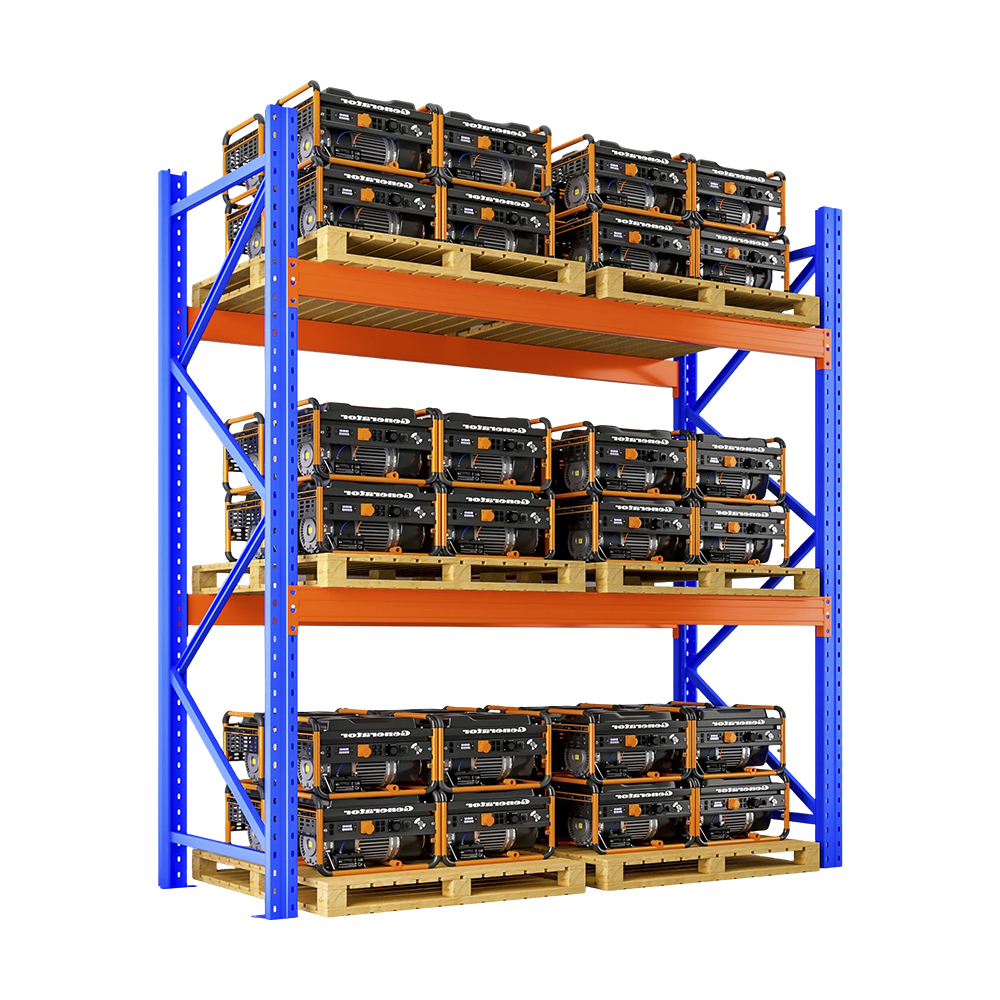
【Maximize Warehouse Storage Efficiency】 This pallet storage rack allows you to fully utilize your warehouse's vertical space, significantly increasing your storage capacity and improving overall warehouse efficiency. It is the perfect solution for storing bulk palletized inventory, allowing you to organize your goods systematically and access them quickly and easily when needed. 【Customizable to Your Warehouse Layout】 The modular design of this rack allows you to customize the layout to fit your warehouse space, whether you need a single row, multiple rows, or a complete warehouse storage system. You can easily adjust the height, width and depth of the racks to fit your specific warehouse dimensions and storage needs, creating a truly customized storage solution. 【Improve Inventory Management】 By organizing your palletized goods on these racks, you can easily categorize and track your inventory, making stocktaking and inventory management much simpler and more efficient. This helps reduce the risk of lost or misplaced goods, improves order fulfillment speed, and ensures that your warehouse operations run smoothly. 【Safe & Compliant Industrial Storage】 This rack is designed and manufactured to meet all industrial safety standards, ensuring that your warehouse storage system is safe and compliant with relevant regulations. 【Cost-Effective Warehouse Storage Solution】 This industrial-grade pallet rack offers exceptional performance and durability at a competitive price, making it a cost-effective alternative to more expensive custom warehouse storage systems. It is built to last for many years, providing a long-term return on your investment and reducing your overall warehouse storage costs over time.
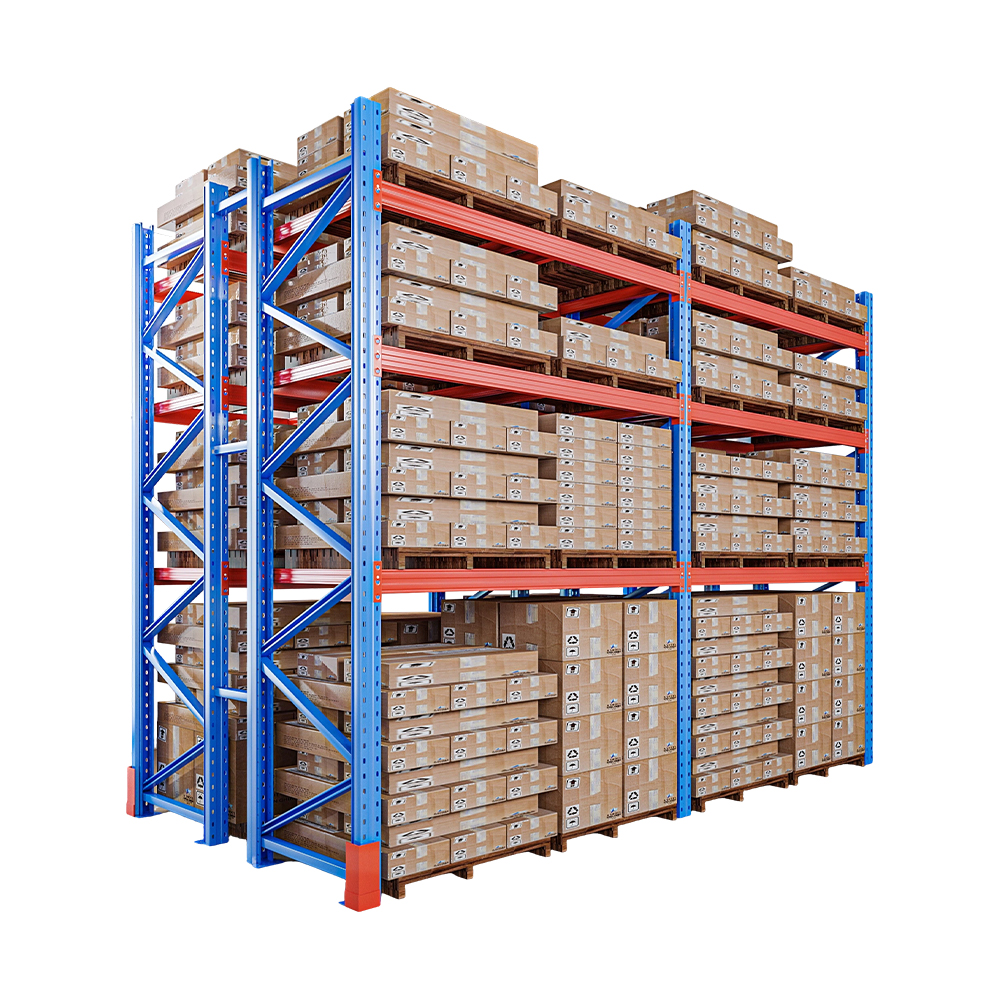
【Heavy-Duty Pallet Storage Rack for Warehouse Use】 This industrial-grade pallet storage rack is specifically engineered for warehouse and factory use, designed to support heavy pallets and bulk inventory with exceptional stability and load-bearing capacity. The reinforced beams and uprights provide superior structural support, making it ideal for storing heavy palletized goods, industrial equipment and bulk materials. 【Flexible Adjustable Beam Design】 The beam levels can be easily adjusted to fit different pallet sizes and storage needs, allowing you to customize the rack to accommodate a wide range of goods. This flexible design ensures that you can make the most of your warehouse space, adapting to your changing inventory and storage requirements at any time. 【High-Capacity Load-Bearing Performance】 This rack is built to handle heavy loads, with each beam capable of supporting the weight of fully loaded pallets, making it suitable for the most demanding industrial storage applications. The reinforced steel construction ensures that the rack remains stable and secure, even when storing the heaviest items, eliminating the risk of collapse or damage. 【Modular Bolted Design for Stability】 The modular bolted design provides exceptional structural rigidity and stability, ensuring that the rack remains solid and wobble-free even when fully loaded. This professional design is widely used in industrial warehouses around the world, meeting all relevant safety standards and providing a reliable long-term storage solution. 【Durable Industrial Finish for Long-Term Use】 The entire rack is treated with a powder coating finish, which provides excellent rust, corrosion and scratch resistance, making it suitable for harsh industrial environments. This finish extends the service life of the rack, ensuring that it remains in good condition for many years, even with heavy daily use.
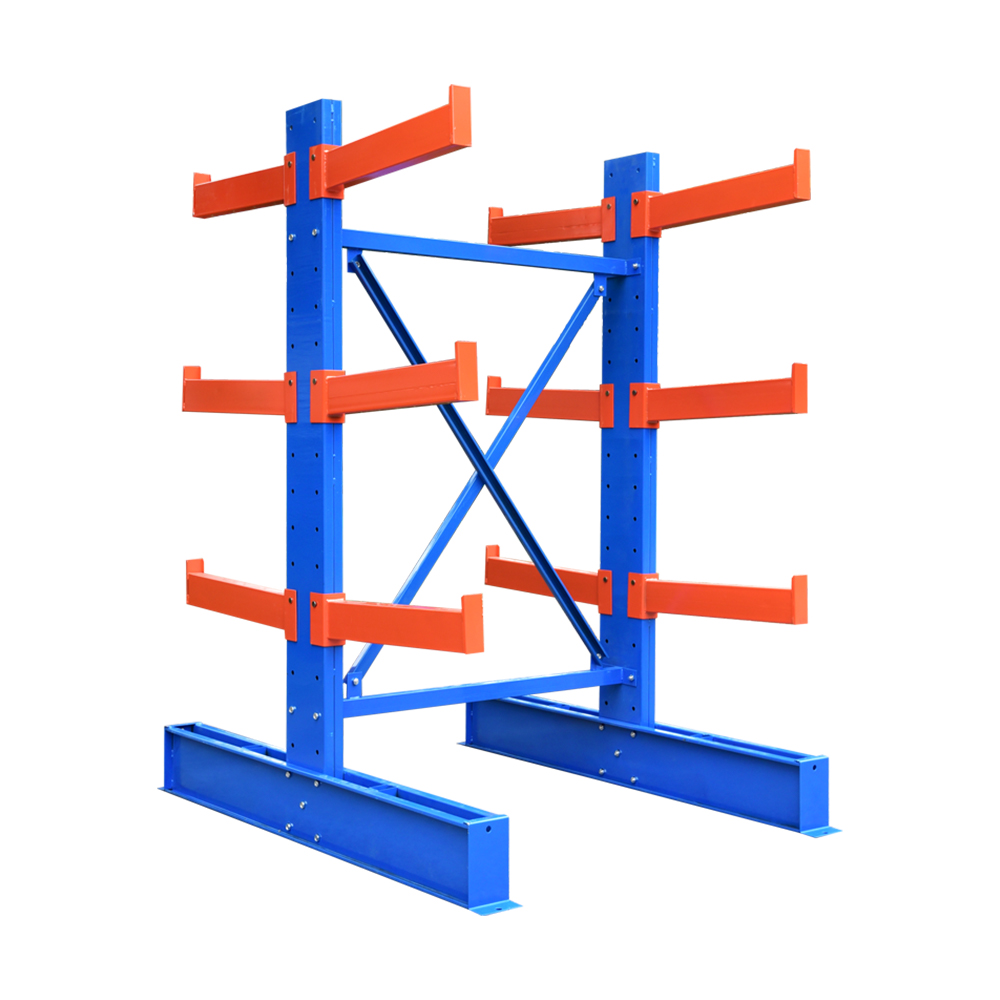
【Ideal Storage Solution for Long & Irregular Goods】 If you need to store long, oversized or irregularly shaped items that don't fit on standard pallet racks, this specialized storage rack is the perfect solution. It is designed specifically to accommodate items such as pipes, lumber, steel bars, carpets, rolls of fabric, construction materials and other long goods, keeping them organized, secure and easily accessible. 【Improve Material Handling Efficiency】 The wide-load accessible design of this rack makes it easy to load and unload long items using standard warehouse equipment, such as forklifts and pallet jacks. This reduces the time and labor required for material handling, improves operational efficiency, and minimizes the risk of damage to your goods during loading and unloading. 【Maximize Your Warehouse Storage Space】 This rack allows you to make the most of your warehouse's vertical space, storing long items vertically or horizontally to maximize your storage capacity. It helps you keep your warehouse organized and clutter-free, reducing wasted floor space and improving overall space utilization in your facility. 【Safe & Secure Storage for Valuable Goods】 The reinforced steel structure and stable design ensure that your long and valuable goods are stored safely and securely, with minimal risk of falling, bending or damage. This gives you peace of mind, knowing that your expensive materials and equipment are well-protected and stored in a safe, organized manner. 【Versatile for Multiple Industrial Applications】 This rack can be used in a wide variety of industrial settings, including warehouses, factories, construction sites, lumber yards, plumbing supply companies and more. Its versatile design and customizable configuration make it suitable for almost any application that requires the storage of long or irregularly shaped items.
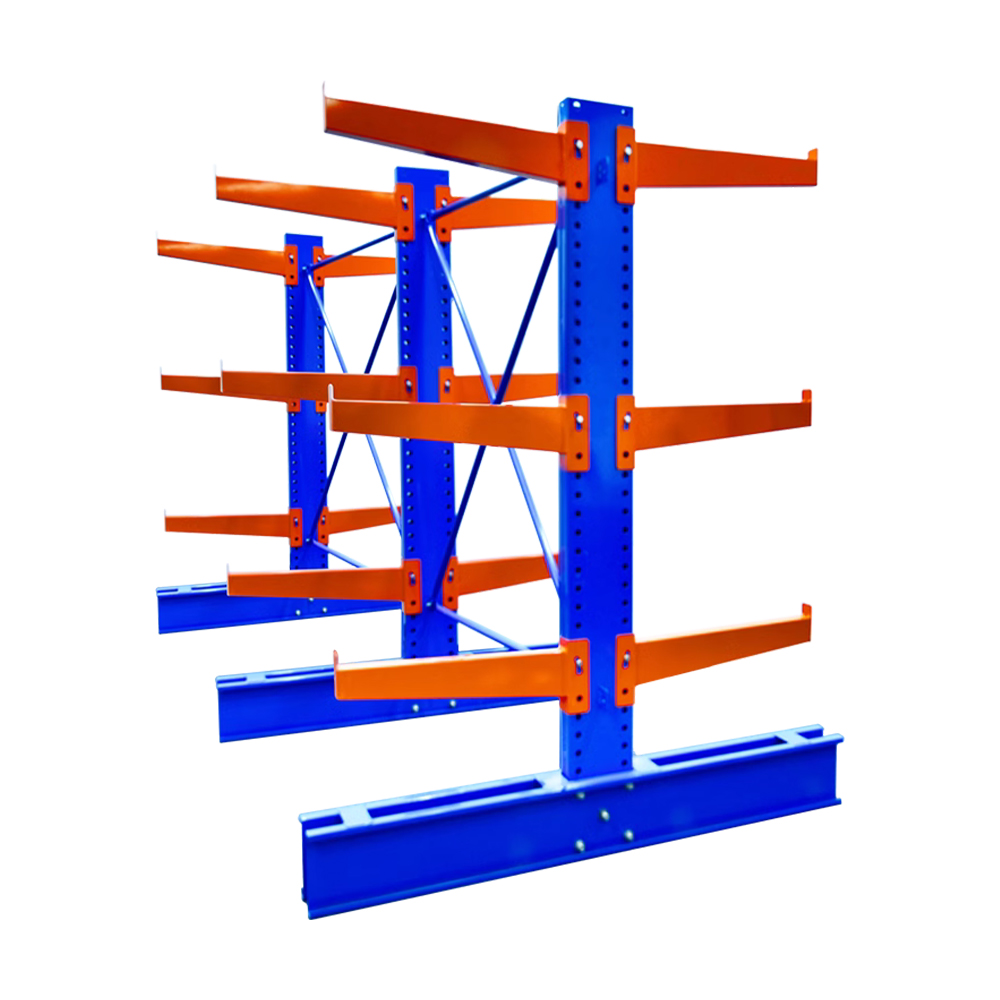
【Heavy-Duty Long Item Storage Rack】 This industrial storage rack is specifically designed for storing long or irregularly shaped goods, such as pipes, lumber, steel bars, carpets, rolls of material and other oversized items. The open design and wide load capacity make it easy to access and store long items, while the reinforced steel structure provides exceptional load-bearing capacity and stability. 【Wide-Load Accessible Design】 The rack features an open, accessible design that allows for easy entry with wide-load handling equipment, such as forklifts, pallet jacks and cranes. This makes it easy to load and unload long or heavy items, reducing the time and effort required for material handling and improving overall operational efficiency. 【Reinforced Steel Construction for Heavy Loads】 Constructed from high-quality heavy-duty steel, this rack offers exceptional strength and durability, capable of supporting the weight of long, heavy items without bending or deforming. The reinforced steel columns and beams form a solid support structure, ensuring that the rack remains stable and secure, even when fully loaded with the heaviest items. 【Flexible Modular Design for Customization】 The modular design of this rack allows you to customize the length, height and width to fit your specific storage needs and the size of your items. You can easily adjust the spacing between the uprights to accommodate items of different lengths, making it a versatile storage solution for a wide range of long and irregularly shaped goods. 【Durable Industrial Finish for Long-Term Use】 The entire rack is treated with a powder coating finish, which provides excellent rust, corrosion and scratch resistance, making it suitable for harsh industrial environments. This finish extends the service life of the rack, ensuring that it remains in good condition for many years, even with heavy daily use in warehouses, factories and construction sites.
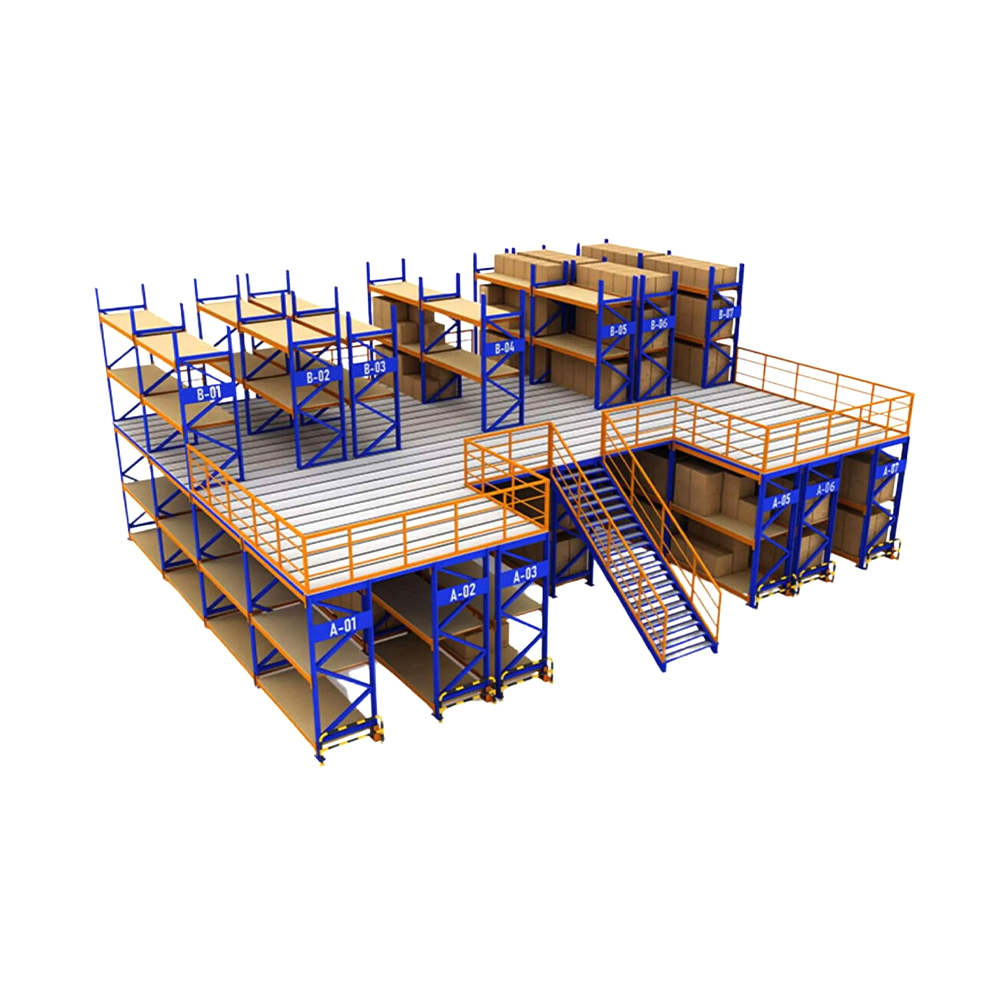
【Optimize Your Warehouse Space Utilization】 This Mezzanine rack system allows you to make the most of every inch of your warehouse space, from the floor to the ceiling, maximizing your storage capacity and reducing wasted space. It is ideal for warehouses of all sizes, from small storage facilities to large distribution centers, helping you improve your space utilization and overall operational efficiency. 【Adaptable to Your Changing Business Needs】 As your business grows and your storage needs change, this modular rack system can be easily expanded, reconfigured or relocated to meet your new requirements. You don't need to invest in an entirely new storage system every time your needs change, this system can grow with your business, saving you time and money in the long run. 【Improve Warehouse Operational Efficiency】 By organizing your inventory on this rack system, you can easily categorize and access your goods, reducing the time it takes to locate and retrieve items. This improves order fulfillment speed, reduces labor costs, and ensures that your warehouse operations run smoothly and efficiently, even during peak periods. 【Safe & Reliable Storage Solution】 The reinforced steel construction and stable modular design ensure that this rack system is safe and reliable, meeting all industrial safety standards. It minimizes the risk of accidents, such as rack collapse or falling goods, providing a safe working environment for your warehouse staff and protecting your valuable inventory. 【Cost-Effective Long-Term Investment】 This industrial-grade rack system offers exceptional performance and durability at a competitive price, making it a cost-effective alternative to more expensive custom storage solutions. It is built to last for many years, providing a long-term return on your investment and reducing your overall warehouse storage costs over time.
【High-Density Warehouse Storage Rack System】 This industrial storage rack system is specifically designed to maximize your warehouse's vertical height and total storage area, allowing you to store more goods in the same floor space. It is the perfect solution for warehouses looking to increase their storage capacity without expanding their physical space, significantly improving overall warehouse efficiency. 【Modular Bolt-Together Design for Easy Assembly】 The modular bolt-together design allows for quick and easy assembly, with all necessary hardware included and a detailed installation manual provided. This design also makes the rack easy to disassemble and relocate, making it ideal for businesses that are moving or need to reconfigure their warehouse layout frequently. 【Flexible Floor Configuration for Custom Layouts】 This rack system offers flexible floor configuration options, allowing you to customize the layout to fit your warehouse space and storage needs. Whether you need narrow aisles for high-density storage, wide aisles for forklift access, or a combination of both, this system can be configured to meet your specific requirements. 【Reinforced Steel Construction for Heavy Loads】 Constructed from high-quality cold-rolled steel, this rack system offers exceptional load-bearing capacity and structural stability, making it suitable for storing heavy goods, industrial equipment and bulk inventory. The reinforced uprights and beams ensure that the system remains stable and secure, even when fully loaded to maximum capacity. 【Durable Industrial Finish for Long-Term Use】 The entire system is treated with a powder coating finish, which provides excellent rust, corrosion and scratch resistance, extending the service life of the racks. This finish is designed to withstand the harsh conditions of industrial warehouse environments, ensuring that the system remains in good condition for many years, even with heavy daily use.
In the fast-paced automotive manufacturing sector, efficient storage and quick parts retrieval are critical to keeping production lines running smoothly. Every day, thousands of different components, from small fasteners to large assemblies, need to be stored, sorted, and delivered to the assembl
With the rapid expansion of Southeast Asian e-commerce, Thailand has emerged as a premier location for overseas warehouses. However, managing a modern fulfillment center requires more than just square footage—it requires a high-performance industrial warehouse racking system capable of handling
Our latest project in Thailand involved a client struggling with "SKU chaos." With thousands of product attributes and a rapidly growing order volume, their floor-stacking method was no longer sustainable. They turned to Shanghai King Global Shelf Co., Ltd. for a scalable warehouse storage soluti